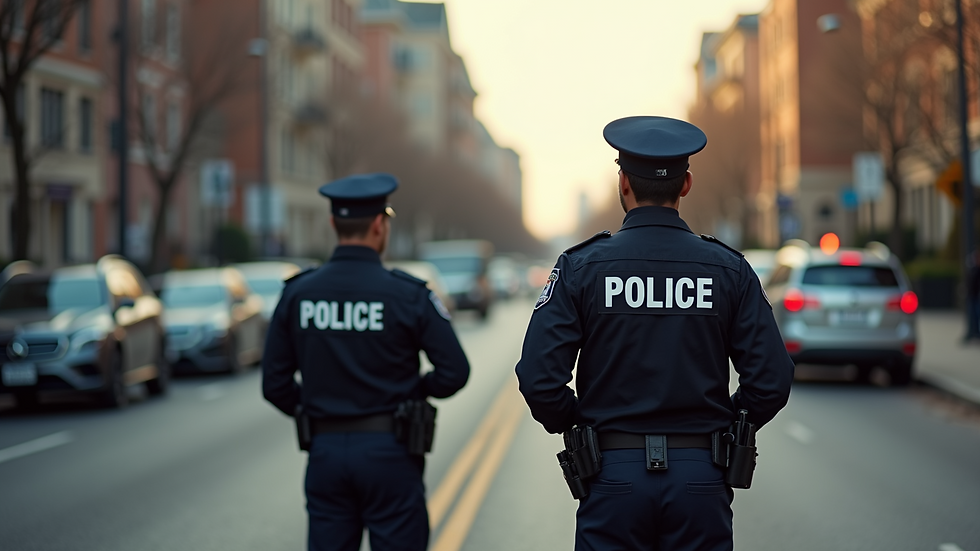
Former St. Charles County Deputy Ryan Kuehner Explores the Evolution of Policing in the United States
- ryankuehner
- May 4, 2025
- 3 min read
Policing in the United States has changed dramatically since it first began. From watchmen patrolling the streets to today’s structured departments, the history of law enforcement is both rich and complex. Former St. Charles County Deputy Ryan Kuehner offers valuable insights into this evolution, highlighting how societal changes, cultural shifts, and technological advancements have reshaped police practices over the years.
The Birth of Modern Policing
In the early 19th century, growing urbanization led to a spike in crime. Communities sought ways to maintain order, which prompted the creation of professional police forces. The first modern police department was established in London in 1829, and this concept quickly crossed the Atlantic.
Cities like New York and Boston formed their own police departments to address challenges presented by an industrial society. These early officers faced significant public distrust and often lacked proper training, yet they laid the groundwork for what policing has become today. In Boston, for example, the department grew from just 15 officers in 1838 to over 450 by 1850, reflecting the growing need for organized law enforcement.
This period marked a clear distinction between policing and military authority, with police forces designed to protect civilians rather than enforce military order.
The 20th Century: The Institutionalization of Police
As the nation transitioned into the 20th century, policing began to take on a more structured approach. The establishment of police academies, such as the first one in Los Angeles in 1891, provided formal training and helped increase professionalism in law enforcement.
Key reforms arose during this time, including the formation of the International Association of Chiefs of Police in 1893. This organization promoted uniform standards and practices across various jurisdictions, making it easier for departments to collaborate and share best practices.
The Prohibition Era of the 1920s posed significant challenges for law enforcement. Police were often caught between enforcing alcohol bans and managing rampant corruption and violence. For instance, in Chicago, police estimated that there was a 200% increase in organized crime associated with speakeasy operations. This tumultuous period identified systemic weaknesses in policing and paved the way for future reforms focused on ethics and accountability.
Civil Rights and the Shift in Policing
The 1960s were a turning point for policing, especially during the Civil Rights Movement. Activists drew attention to the systemic racism and brutality faced by marginalized communities, which resulted in greater scrutiny of police practices.
During this time, community policing initiatives emerged, aimed at rebuilding trust between law enforcement and the communities they served. In cities like Los Angeles, officers began to participate in community meetings, working alongside residents to address crime more holistically.
In 1967, the President's Commission on Law Enforcement and the Administration of Justice released significant recommendations, emphasizing community cooperation, equitable enforcement, and the necessity for police to adapt in response to societal changes.
The Impact of Technology on Policing
The late 20th century introduced a wave of technology that significantly changed policing methods. The use of radio communications, followed by computer-aided dispatch systems, improved police efficiency substantially.
In the 21st century, resources like body cameras and data analytics transformed how law enforcement operates. For instance, studies show that departments using body cameras experienced up to a 93% reduction in complaints against officers. These tools foster greater accountability and transparency.
However, the integration of technology brought challenges. Concerns over surveillance privacy and potential biases in data-driven decision-making have led to critical discussions about the ethics of modern policing.
The Future of Policing: A Dialogue
Today's law enforcement landscape is characterized by ongoing conversations about reform and accountability. Events like the protests after George Floyd's death have acted as catalysts for change nationwide, prompting departments to reevaluate their practices.
Former Deputy Ryan Kuehner emphasizes that community engagement is essential for the future of policing. Trust is crucial, as is fostering dialogue and implementing fair practices that reflect the diverse communities served by police.
Continued training in de-escalation techniques and cultural competency remains vital. As law enforcement agencies adapt, they must prioritize public safety while respecting civil rights.
A Path Forward
The evolution of policing in the United States showcases a journey of continual change and adaptation. From the early watchmen of the 1800s to the complex law enforcement institutions of today, this history reflects the shifting values and priorities of our society.
Learning from the past is critical. We must strive to create a police force that not only enforces the law but also serves as a solid pillar of the community. The insights of former Deputy Ryan Kuehner inspire important conversations about shaping the future of law enforcement in America.